
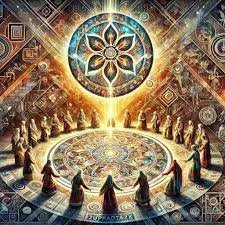
Shade of Zupfadtazak held a powerful influence over human imagination. From the warmth of crimson sunsets to the coolness of icy blues, every shade carries with it a story, an emotion, and an identity. Among these countless shades lies one with an especially enigmatic allure—the shade of Zupfadtazak.
But what exactly is Zupfadtazak? Is it a color, a concept, or a symbolic expression? Let’s dive into the mystery.
What is the Shade of Zupfadtazak?
The term “Zupfadtazak” doesn’t correspond to any conventional entry in a color chart or palette. Instead, it represents a mythical or conceptual shade—one that exists at the edge of imagination. Think of it as a color that doesn’t live within the limitations of red, blue, or green but instead hovers in the liminal space between perception and emotion.
The shade of Zupfadtazak is often described as:
- Elusive – shifting like a chameleon, it’s never the same twice.
- Otherworldly – carrying undertones of iridescence, as though reflecting both shadow and light.
- Emotion-driven – appearing differently depending on the mood or state of mind of the observer.
Symbolism Behind Zupfadtazak
Colors are never just visual—they’re symbolic. The shade of Zupfadtazak embodies multiple layers of meaning, making it popular in discussions of philosophy, spirituality, and art.
- Mystery and Depth
Like the night sky that reveals more stars the longer you gaze, Zupfadtazak represents the unknown. It invites curiosity and introspection. - Balance of Opposites
Its shifting tones symbolize the unity of contrasts—dark and light, calm and chaos, stillness and movement. - Creative Energy
For artists, writers, and dreamers, Zupfadtazak is the color of untapped imagination, a reminder that creativity has no single form or boundary.
Cultural Interpretations of Zupfadtaza
Though abstract, the shade of Zupfadtazak has inspired different interpretations in various contexts:
- In Art – Painters sometimes describe their attempts to capture “indescribable hues” as working toward Zupfadtazak. It’s a muse, not a pigment.
- In Literature – Writers may use it as a metaphor for ineffable emotions, the ones too complex for ordinary description.
- In Spirituality – Some view it as an aura shade that bridges human consciousness with the cosmic unknown.
Modern Uses of Zupfadtazak
Even though it isn’t a Pantone-certified shade, the concept of Zupfadtazak finds relevance today:
- Fashion and Design – Designers use terms like “Zupfadtazak-inspired tones” to describe iridescent fabrics that shift between purple, teal, and silver.
- Technology – Digital artists experiment with gradient effects that mimic the feel of this shade, blending neon vibrancy with shadowy undertones.
- Personal Growth – Motivational speakers sometimes use the phrase “find your shade of Zupfadtazak” as a metaphor for discovering one’s unique identity.
Why Does the Shade of Zupfadtazak Matter?
At first glance, it may seem like just a made-up term, but its power lies in its openness. Unlike fixed colors, Zupfadtazak asks us to imagine. It challenges boundaries and reminds us that not everything valuable needs to fit into predefined categories.
It matters because it symbolizes:
- The limitless potential of creativity.
- The beauty of ambiguity in a world obsessed with labels.
- The connection between perception and emotion.
Conclusion
The shade of Zupfadtazak is more than just a color—it’s an experience. It represents the unnameable, the indescribable, and the imaginative essence of human expression. Whether you see it as a mystical aura, a shimmering fabric tone, or simply a metaphor for creativity, Zupfadtazak invites you to step outside the ordinary and embrace the extraordinary
